
If you feel like you can’t change because you always slip back into old patterns, this article explains why — and how to keep going.
Why Can’t I Change?
You can’t change because you have been the person you are for a very long time. Changing requires a total re-identification process, a shedding of your old self and a rebirth of who you want to become. It is also very different for neurodivergent people to accept change because our brains are quite literally wired differently, and therefore respond to different methods and experiences. I know it wouldn’t matter what the negative repercussion, when PMDD and AuDHD overwhelm hits, it is very challenging to shift my energy!

Recently, I decided to change again. It is always again, because I keep failing to change, over and over again. This time, though, I was determined it would be different. I wasn’t going to be acting or behaving or doing this change – I was to become it!
For 15 days, I kept this new version of me top of mind; I was the person I wanted to be in every moment. I lived it, breathed it, and became it. It wasn’t ‘what would the best version of me do in this moment?’. It was ‘I am my best self, therefore I do this’. It was pure embodiment, until it wasn’t.
I had a friend come and stay for a week while she was between homes, and that slight shift in my routine shifted my focus, and the version of me I had been holding on so tightly to, slipped back to the person I was before.
I stopped being, started pushing, started trying, and the more I put this effort in, the further from this person I became. The more distance grew between who I was and who I wanted to be.
In those 15 days, I had managed to stay as the person I wanted to be through the worst migraine of my life, I had gardened with vigour, watched TV consciously for enjoyment rather than to escape, made healthy meals and taken inspired action more than once.
Yet this version of me couldn’t handle the external influences of a broken routine, and that is okay.
Being the person you want to be, despite the situation, is where the change happens. I’ve always thought that anyone can learn to focus on God or become spiritual when they live in a bubble of meditation and prayer; the true challenge is to be with God in the line at the DMV or at a shopping centre with a screaming child. Putting your attention on your true self is the same. It isn’t you, until it is you always.
Changing requires a change of consciousness, a focus on who you are, so keenly, so focused, that there is no room for your old self to surface. Yet if you can’t hold that state of consciousness whilst there are external influences, you are not changed yet, you are still trying.
Why Do I Feel Like I’m Failing?
Feeling like you are always failing is because there is a separation between who you want to be and who you are. When you simply are, you cannot fail. Both changing and failing suggest a linear path; change is moving from one state of consciousness to another, failing is not getting there – when you simply are, there is no failure. Practically speaking, when you feel like ‘I am failing at life,’ it is because of this disconnect.
Reasons why you feel like you are failing at life:
- What you want and what you have are different
- Who you are and who you want to be are different
- The way you think and the way you want to think are different
- What you do, and what you want to do, are different
Feeling like you are failing at life all comes down to separation. You want to change but feel like you can’t because there is too great a gap between you and the idea of you.
It is like looking at yourself through a window, rather than simply being you.

Why Is Change So Hard for Me?
Change is so hard for you because to change isn’t to act differently, feel differently, behave differently, think differently; it is to be different. To be something you are not is difficult. It is hard to change yourself because to change is to be something you weren’t before.
Maybe you think to yourself, “Why do I struggle with change?”
Well – you struggle because you are trying.
Think about the word ‘struggle’, it means “make forceful or violent efforts to get free of restraint or constriction.” Forceful, violent efforts, hey? Now, does anyone you know who radically accepts themselves, someone you look up to, or think of as wonderful, are the things they do you like about them require them going around with forceful, violent efforts? No. They simply are. They simply are rich, are strong, are happy, are who they are.
Maybe you think to yourself, “Why can’t I cope with change?”.
But pause for a moment — do you cope with being you, as you are right now? Is that something you have to “deal with”?
To cope means “to deal effectively with something difficult.”
So ask yourself:
Do you currently experience yourself as difficult to deal with?
If your answer is yes, then your struggle isn’t actually about coping with change — it’s about coping with who you are right now.
Is the person you want to become some kind of hardship you have to manage?
If your answer is no (which I hope it is), then becoming that person shouldn’t require coping mechanisms. The only thing you are coping with is who you are now, not who you will become.
A healthy person doesn’t cope with being healthy; they simply are healthy.
So why would becoming who you want to be be something you “cope” with?
If the change is aligned with your true self — who you want to be, where you want to be, what you want to be — then it isn’t something to cope with. It’s something to step into.

I’m Trying to Change, but I Keep Slipping
Why do you keep slipping every time you try to change? It’s not that you can’t change; you keep slipping because you have not changed yet. That is okay, most people don’t slip backwards, they just slip over. It is often a natural part of the process.
I keep slipping every time I try to change; I slip all the time. I maintain a state of consciousness I am really pleased with, and then it slips away for one reason or another.
Yes, the snakes and ladders of change. You climb the ladder, only to roll the dice and slide back down. What you feel is that you’ve gone so far back down the board that you’ve let yourself down, that you have failed, that you will never reach the top if you keep landing on the snake’s head over and over again. When in reality, you don’t need to fear the snake’s head, you don’t even need to avoid it. Life is filled with situations that put us off track, that eat us up and slide us down to our old state of consciousness.
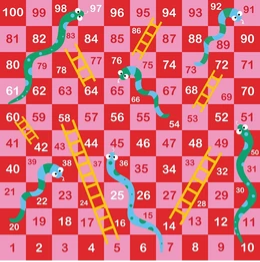
If you slide back, know this:
- It does not matter how many snakes you slide down.
- It doesn’t even matter how long you stay at the bottom for.
- It doesn’t matter how far the slide takes you.
Every single time you slide, you have a choice. Keep rolling, going a few squares at a time, or climb some ladders.
The benefit of having been further up the board is that you know what it is like there. It is not unfamiliar territory you have to navigate for the first time. You likely don’t have to creep back in; you can go down a snake one day and up the ladder the next, right back to where you were.
The reason you slip is often because you are not on solid ground yet. When I was on my 15-day run, I was embodying the person I wanted to be every single minute – but it took conscious effort. I was still focused on it.
How focused are you on who you are right now? Probably not at all. They say something like 90% of who we are is automated programming from our subconscious. So, to override that subconscious autonomy, often you have to cognitively think and stay present with who you want to be. The slip comes from when that focus wanes. The more you exist in that space at the top of the board, regardless of how tightly you are holding on, the more that consciousness becomes your automated subconscious programming, the less you need to cognitively think about it. It is who you are; you are on solid ground. Therefore. No more slipping.
What to Do When You Fail at Changing
When you fail at changing, change again. There is no true failure because you are still changing. Every time you fail, you learn. Applying what you learned from that failure means you are changing — because you’re understanding more and more about who you are and how you respond to the world. You don’t actually fail to change; you only feel like you’ve failed at being the version of you you want to become.
What’s really happening is that you’re comparing yourself to the future version of you, and when you’ve been working toward that version and then slip, it feels like you’ve failed at being them. But you were never that person yet; you were simply becoming them.
You can’t slip down a snake when the square you’re standing on is solid. If you slipped, it’s only because you hadn’t climbed to the square you thought you were on yet — and that’s okay
When You Fail
To fail is to stop trying.
Failure: Noun
- lack of success
- neglect or omission of expected or required action
What do you do if you “fail” at changing because you lack success?
First, take time out of the equation.
You can’t fail simply because you aren’t successful yet. “Lack of success” only becomes failure when you declare the process over.
Imagine you’re trying to change your body, and you want a six-pack. You lose weight, build strength, feel better — but there’s still no visible six-pack. You call it failure. But what you’re really describing is unfinished success.
Because who is to say the six-pack wouldn’t appear next week, next month, or next year?
The only way it becomes “failure” is if you stop before the outcome has time to arrive.
Most of the time, what we call failure is just a mis-timed expectation.
You didn’t fail at the change — you just expected the result to arrive faster than your process could deliver it.
What to do if you failed at changing because you didn’t take the required action?
Take the required action.
I know — painfully simple, yet excruciatingly difficult at times.
If you didn’t do the thing, that’s why you “failed.” So just do the thing. Or do a thing. Eventually, one of those things will move you forward, even if the path is backwards, sideways, chaotic, or nothing like how you imagined. Movement creates change. Always.
People joke that in The Lord of the Rings, the eagles could have just flown the ring to Mount Doom and saved everyone the trouble. But that would have created no change at all. Evil would be destroyed, but the characters wouldn’t be transformed. The journey — the hard, messy, inconvenient journey — is what made the destruction of the ring possible.
We are so often frustrated that we cannot just mount an eagle and fly to where we are going. I know I am. But the truth is: we can’t land at the destination until we’ve grown the wings to live there.
How to Come Back After Failure
Know that every time you fail and try again, you become more of the person you want to be. If you were given the change you wanted overnight, you probably wouldn’t be able to hold onto it — mindset is built, not handed to you.
Every failure teaches you how to live in a new state of consciousness within the world you already inhabit. You learn which external influences need adjusting and what internal conditions you need to set to align with who you want to be.
For example, if I want to become a healthy person, I might start by introducing nutritious foods while still eating junk. Slowly, I remove the junk, slip up, then rebuild my habits. Up and down I go — and through each slip, I learn how to navigate real-life situations.
Being healthy isn’t about waving a magic wand and instantly stopping cravings, or knowing perfectly how to handle every birthday party temptation. It’s about learning, bit by bit, how to be healthy in all situations — often through failure.
This is how you recover from failure in life: by failing, coming back up, and trying again. Each setback doesn’t make you weaker — it makes you more resilient, more aware, more strong, more focused, and more knowledgeable.

Change Isn’t Linear and Slipping Doesn’t Mean You Failed
It’s not that you can’t change. It’s not that you’re failing at changing. Failure is part of the process — the bridge between becoming and being. Until you reach the state of being, becoming is slippery, and you will likely slip along the way.
Every slip teaches you. Every lesson makes you more. Every time you embody more of who you want to be, you simply are more — until one day, you just are.
Change isn’t instant. You haven’t failed; you’re still becoming. And when change becomes a state of being, failure disappears — because being is simply existing, and there’s only one way to fail that.
If you are struggling with your neurodivergent identity and that is part of why you struggle to change, try AuDHD Identity: You Are More Than Enough and see if it shifts your perspective a little.
Victoria-Rose Paris is an Adelaide-based AuDHD content creator sharing lived experiences of neurodiversity. With a history of endometriosis and a focus on living life to the fullest while honouring her neurodiverse self, she navigates identity, productivity, travel, health, and adventures. She is also the founder of The Adulting Club, where neurodivergent people bring their “too hard basket”, and she brings the education and dopamine. Find her raw, unfiltered content on Instagram and TikTok.