
Travel can be exciting, but when you’re autistic, it often comes with extra layers of challenge: Lack of routine, sensory overload, social pressure and new environments can all make travel with autism uncomfortable. Worse, it can feel like you’re battling your brain so much, you barely enjoy the experience.
I recently went on a trip to Melbourne, a city I’ve visited freely since I was 13 and usually feel comfortable in. But this time, despite that familiarity, I found myself completely overstimulated and stuck in my head, spiralling over the fact I wasn’t having as much fun as I “should” have been. I ended up cutting the trip short.
I’m unpacking the mistakes I made and what I’ll do differently next time, so that I can truly master how to travel with autism. Whether you’re planning a holiday, work trip, or weekend away, here’s how to travel with autism in a way that feels supportive, grounding, and actually enjoyable.
So, let’s get onto my autistic travel tips that will help you understand how to travel as an autistic person.
How to Create Sensory-Friendly Travel
When you travel with autism you need to remember that your needs are different and that is okay.
Just like a CEO ensures they have Wi-Fi for important calls, or a parent chooses a hotel with kid-friendly options, when you travel with autism, you need to consider your unique needs.
Plan Alone Time to Reduce Autistic Overwhelm While Travelling
The error in my ways was not allowing enough downtime where I could be alone and unmasked. Despite visiting friends with whom I felt completely comfortable, I was still engaged socially almost all of the time. I was with company from morning to night, often talking frantically into the evening with excitement. This was all fantastic, and totally nourished my need for community, support and love, but I didn’t get any time to just be.
To reduce autistic travel overwhelm, I have found that I need space to simply be. This space might be different depending on your unique needs. Remember, autism presents very differently in everyone. Just as there are an insurmountable number of colours on the colour wheel, there are a million ways your autism may present.
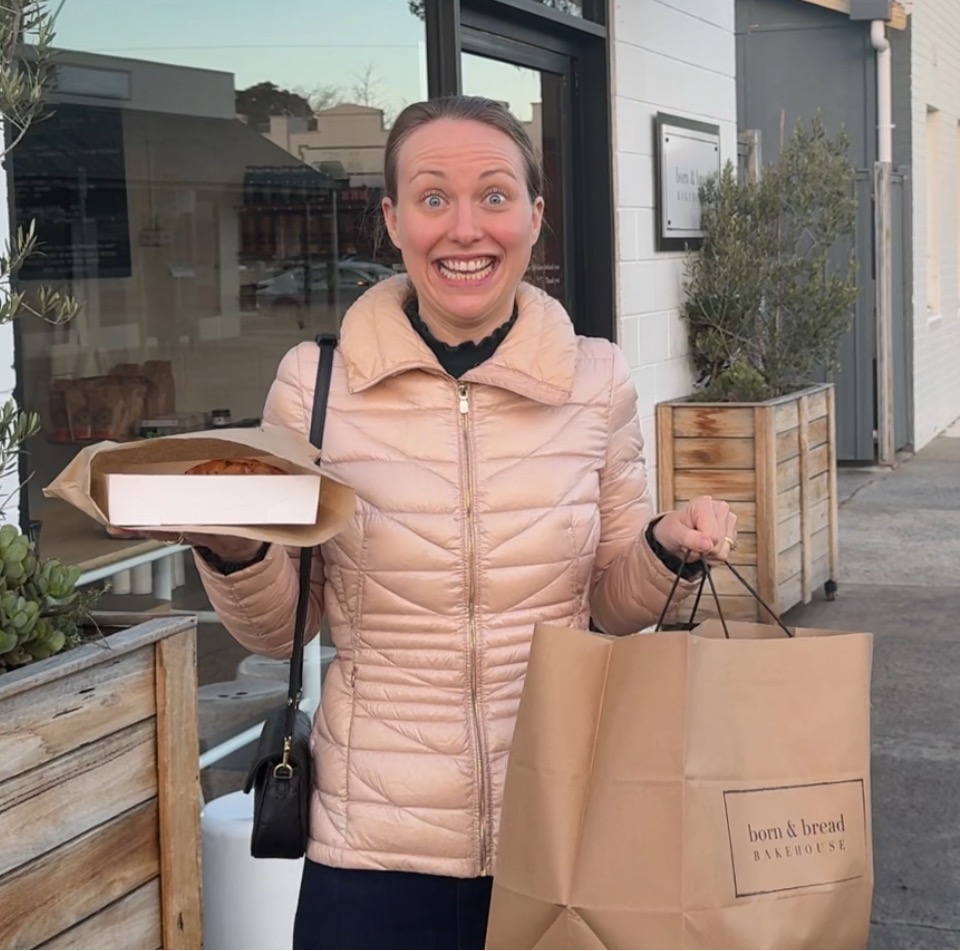
Feeling very excited at Born & Bread Bakehouse which I became absolutely obsessed with!
How to Take Micro-Breaks While You Travel with Autism
I wasn’t going to skip late-night chats with my friends — they’re part of the joy. But I could’ve carved out small pockets of alone time when my hosts were naturally occupied, like putting their kid to bed or getting ready to go out.
If I had been more mindful of these little moments, I could have probably removed myself for small periods that would have been of no consequence to my host, but that would have allowed me some space to just be settled in my own space for a bit.
If these moments don’t seem accessible, you could also set up a period alone where you do something that fills your cup, whether that be skipping breakfast and meeting them out later, or watching a movie or TV show you are interested in that requires less engagement, whilst still being with company.
If you aren’t travelling to see friends, and are doing more of the tourist route. Ensure you get some alone time by spending some time in your accommodation.
Limited stimulation, maximum presence. You need to minimise sensory input for autistic travel success.
Don’t go out for that dinner, get takeout or order in, push the morning tour a little later so you can have a lazy morning, or plan your evening meal a little earlier and come back and watch some TV (or whatever activity brings you joy and regulation) before bed. Make sure you’re not on the go all day or constantly needing to engage with people.
How to Make Space to Be Unmasked While Travelling
A common thread amongst people with autism is that we need to have time to be unmasked. When you travel with autism, often, there isn’t enough time made for that.
I thought I was unmasked with my friends — that’s why I love them. But even being “weird and wonderful” still takes effort. From engaging in conversation to managing the best time to speak, attempting to hold a conversation whilst walking down a highly stimulating street, choosing something off the menu whilst catching up on how they have been recently. All of these things take a mental load.
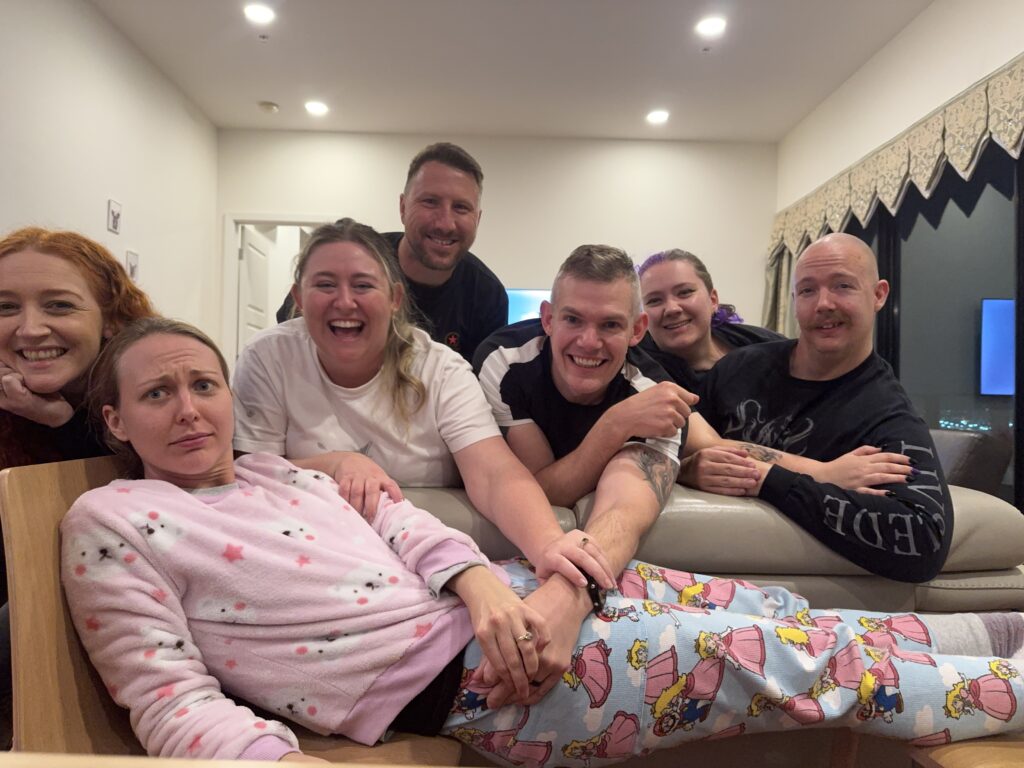
Ironically, this is a genuine photo – I was not posing to look upset, I was genuinely frustrated because my husband was tickling me.
The type of mental load autistic people experience at home would likely be much more structured and significantly less stimulating than when you travel as an autistic person.
When you travel with autism, every charming conversation with a friend still drains your battery, every splendid sight uses so much processing power, and every magical meal is a decision to be made.
Only you know your needs, but just ensure that you have some time in your trip where you are not with anyone you need to ‘entertain’ and you are not anywhere stimulating. For me, these moments are in bed, on the couch, watching TV, or reading. Even as a “passenger princess,” I don’t recharge in the car — there’s too much visual stimulation on the move. But maybe you find your calm at the gym or on a nature walk. Prioritise that!
Managing Executive Dysfunction When You Travel with Autism
Something I hadn’t considered that would lead to autistic travel overwhelm was executive dysfunction. I had such a rough plan for my trip away, and had very little interest in doing anything in particular, that I left it too open, too free, too unplanned.
I knew who I was going to visit and when, I knew I liked visiting op-shops or consignment stores, and I knew that the weekend was going to include Friday night games with my friends, Saturday morning breakfast, then getting ready, a limo ride and a fancy dinner. But other than those facts, I didn’t know where we would eat, where to go for lunch, what café to meet at, or what other activities to fill my days with.
So, when I was at a friend’s house and they asked what I wanted to do, I had no answers for them. I was happy just seeing them, I didn’t really need to ‘do’ anything. When you travel with autism, you are travelling with this bag of needs that all need meeting. The problem is, you often don’t know how to meet them, because you lack the executive function to accommodate your autistic needs.
Shortlists to Help with Executive Dysfunction While Travelling
What I really needed was a shortlist of activities I enjoy—something to offer my host and reduce decision fatigue.
This could be something as simple as, ‘I’d like to play cards’ or, ‘I’m not a breakfast person, but I saw online there was a good pizza place near you for lunch’ or ‘are there any nice bushwalks around this area we could go on?’. A shortlist your host can engage with—while you still guide—makes both your jobs easier.
It is especially good for suggesting somewhere to eat. When you travel with autism, it is like travelling with a laundry list of food and venues you don’t like, which can make new places really hard (well, at least it is for me).
My cousin is a coffee connoisseur and suggested some really great cafes whilst I was in Brunswick. The thing is that she is that funky Melbournite, and loves warehouse cafes. Whilst I find them loud, cold, and the food unidentifiable.
My cousin’s first café suggestion had landed me with essentially a chicken schnitzel (which was lovely, but they wrote it on the menu like it was some magical dish; I had to ask what it was). The next time she suggested we go out, I spoke up more. I asked very specifically, ‘I would like somewhere warm and cozy’. This gave her a great frame of reference to suggest somewhere that would meet my sensory needs whilst also showcasing her expertise in the area.
Create a Plan B to Avoid Autistic Overwhelm Whilst Travelling
Just like it is good to have a short list of activities, foods or places to go, it is great to have a plan B.
- What happens if you are feeling overstimulated?
- What happens if you aren’t up to going to wherever it is because of an unmet need?
- What happens if you don’t feel up to something that has been planned?
It is really good to have an alternative option. For example, I wanted to go op-shopping in Fitzroy, it is a funky area, an activity I love doing and very familiar to me. However, I got entirely overstimulated and got close to an autistic meltdown.
I had a bit of a whimper outside a consignment store—my sensory needs weren’t being met, and the chaotic racks overwhelmed me.
By that point, I couldn’t think clearly, so my husband stepped in with a plan B: a favourite restaurant on the Fitzroy strip where I could regulate and reset.
I went from overwhelmed and overstimulated shopping to perfectly settled and calm. I met my sensory needs for water, warmth and peace. I was able to sit and collect myself, and it made a huge difference in turning my day around from feeling like a failure.
You won’t always know where to feel safe when you travel with autism, but it helps to think ahead or tell someone what kind of places calm your nervous system when you’re flustered.
It would have been wiser for me to actually abort the op-shopping earlier and just simply spend the afternoon in this lovely restaurant, but I wanted so badly not to ‘fail’. I felt like if I gave up, I would be letting my ‘autism win’ rather than just acknowledging that it had been a big week and that I probably needed some slow peace.
Some good ideas for plan B’s can be made as an ‘instead of’ plan or an exit strategy. These can range from spending the day indoors, simply playing games or watching movies if you need, or minimising your great adventure to just one element, like a calm paddle boat trip or picnic, rather than a full hike and kayak. Alternatively, you can just set up places you know that require minimal executive function that you will feel safe and secure at, potentially at chain restaurants where you order the same thing every time, having the local session times at the cinema in mind in case you need something more low-key, or just cueing up a peaceful café or park to spend some time in to re-settle.
How Support People Can Help Autistic Travellers
One of the best things you can do when you travel as an autistic person is to have a safe and supportive person with you. This is not always possible, but it can really help when you get overwhelmed; that you have someone there with you who knows your needs and can step in if you become dysregulated.
For me, my husband was great at this. When he saw I wasn’t coping at the op-shop, he went outside with me, asked if I needed a hug, and then met my immediate needs. I needed water and to sit down somewhere quietly. He suggested the café we had passed I was familiar with. I did protest because I knew they would be closing within half an hour, and I didn’t want to feel rushed out, because that would have unsettled me more. But he reminded me I already knew what I wanted—a cute little cake—and eating it wouldn’t take long.
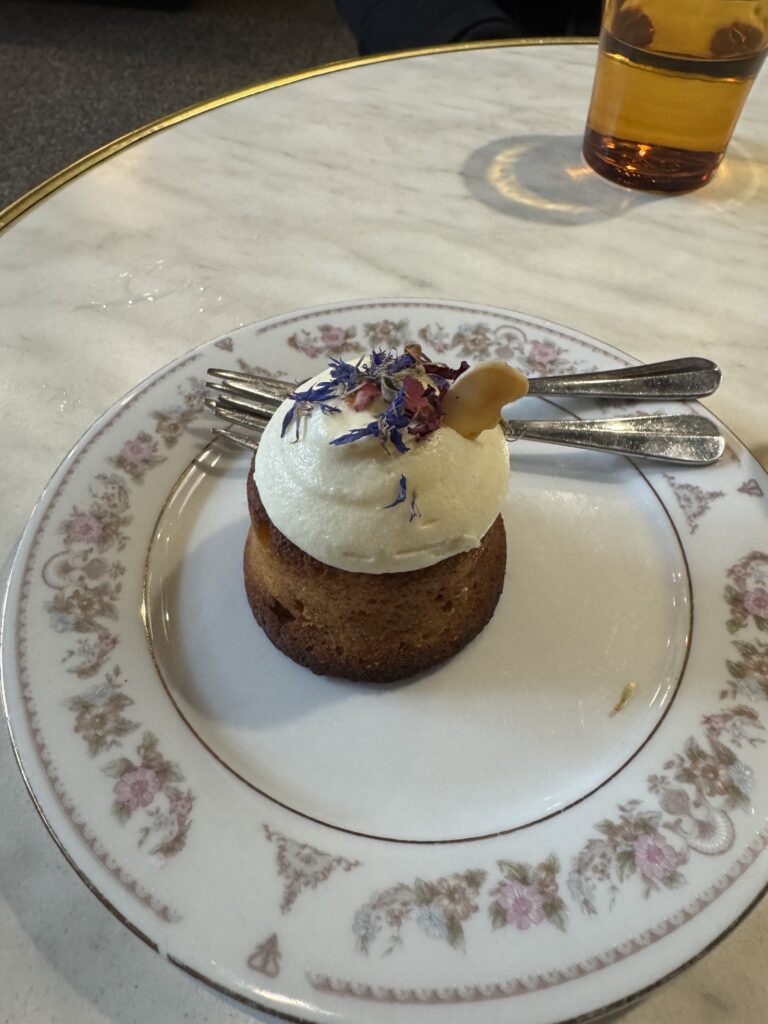
A sensory friendly lunch spot in Fitzroy – Alimentari (they will turn the background music down if you ask them too).
It was the best thing, because it turned out perfectly. The restaurant was so welcoming, they even offered me another drink even though they were five minutes from closing. I never felt rushed or like I was a hindrance. Yes, the staff cleaned up around us, but there was a calm and nurturing energy that completely settled me.
Your support person may respond in a multitude of ways, but if they need help, maybe create a bit of a ‘user’s guide’ or ‘manual’ to your autistic overwhelm or ‘what to do when I’m feeling overstimulated’ style directions for them so that they can support you in the best way possible.
If you would like a roadmap to help you create your plan for when you are overwhelmed, either for yourself or to give to a support person, click here for my free downloadable roadmap on how to travel with autism.
Meeting Sensory Needs While You Travel with Autism
Finally, when travelling as someone with autism, you need to meet your needs. For me, this is predominantly sensory, but yours may be more social or emotional; whatever they are, plan for them.
I made the fatal mistake of going shopping without a water bottle. I don’t usually do this, but I figured I wouldn’t be long and I didn’t want to lug it about when I had so many clothes on due to the cold. This made me feel irrationally angry and dysregulated when I was thirsty, and really frustrated when I couldn’t find somewhere to even buy a drink.
Making sure I am fed is also important. There is nothing worse than choosing a restaurant when you are really hungry, you bounce around from one to the next like you’ve got decision paralysis, like what happens when you scroll Netflix for too long. Before you know it, you just go anywhere and spend the entire meal wishing you had tried just one more option.
Either make sure you are full, or pack snacks. I often have something with me because it saves me from feeling overwhelmed or shutting down when I am hungry, but can’t find an appropriate place to eat.
Temperature matters too. I was so cold in Melbourne, I layered up — leggings under jeans, singlet, long-sleeved, cardigan, jacket, hat, gloves. Changing at op-shops was a nightmare, but I was warm — and that made all the difference.
Whatever it is you need to meet your needs as you travel with autism, do it. Sometimes I take earplugs, other times I need sunglasses – travelling is not the time to experiment going out without them. It can be a hassle carrying a big bag around, but what’s worse is not having the thing you need to settle yourself when you travel with autism.
How to Travel with Autism
Whether you need alone time, breaks, sensory friendly spaces, plan B’s or emergency exit strategies, or you just simply need to make sure you are warm, watered and fed – it is important to look after your autistic needs.
Travelling can be an incredible joy, but it includes significantly more stimuli than our routine at home. Make sure you give yourself the time and space to accommodate your sensory needs and ensure that you have actionable steps in case you are feeling overwhelmed, dealing with decision paralysis, or executive dysfunction.
You are a hyper-aware, intelligent human being. You likely have pattern recognition skills you don’t even realise. What do you need to travel safely? What plans do you need to have in place in terms of support? What do you need to thrive while travelling? How can you travel with autism?
If you would like some support putting together a roadmap for managing your autistic needs whilst travelling, click here for your free checklist.
You might travel with autism, but it doesn’t have to be extra baggage.

If taking your autism with you is already too much to pack in your suitcase, check out my article on neurodivergent packing where I make it easier to get your literal s*** together before your next adventure.
If you would like to hear more about my recent trip and what I learnt from my experience, check out my YouTube video where I unpack my trip, both physically, mentally and emotionally.